Posts

Connect with Core at the 2026 HFES International Symposium on Human Factors and Ergonomics in Health Care

Image
Our team members here at Core Human Factors are looking forward to connecting with you in New York City from March 22 - 25, 2026! Check out the schedule below of topics that will be presented by our Core team members.  Please stop by booth #21 to hear more about the human factors services that Core provides, in addition to IRB and participant recruitment services. For more information on the symposium, visit the event website . To learn more about the services Core provides, click here .

Oversimplified: How Drug Injector Demonstrations on Television Can Create Dangerous Overconfidence

Image
By Jack Sharples and Tyler Oates In today's media landscape, we're constantly exposed to bite-sized information about complex and unfamiliar topics, especially in the medical industry. Whether in popular medical dramas or pharmaceutical commercials, the oversimplification of medical device use raises critical questions about safety, particularly when it comes to autoinjector demonstrations in television advertisements. Consider the common scenario of a pharmaceutical advertisement showing a quick, simplified demonstration of an autoinjector. The process looks straightforward: choose a site, inject the medication, and you’re done. But is this abbreviated demonstration helping or harming the potential for correct device use? The concern lies in two psychological phenomena that affect how we process and internalize information. The anchoring effect is our tendency to rely heavily on the first piece of information we encounter about a topic. In the above scenario, when viewer...

Bad Human Factors in Entertainment

Image
 By: Rory Klingensmith We all know the movie scene where the main character needs to wire an urgent ransom to the kidnapper, but the banking app is confusing. In these entertaining scenes, we see missed opportunities for human factors research and engineering. Had the software for the wire transfer undergone one or two rounds of formative human factors testing or an expert review, perhaps the high-stakes situation would have been resolved with ease. Although it would take away from the intensity of the movie scene, it would likely save our main character from sending money to the wrong person. Examples of human factors – or the lack thereof – are ever-present in our everyday lives, even in our entertainment. The following are a few more examples of products in movies where integrating human factors principles into the design process and conducting human factors research could have made all the difference: The Incredibles (2004) - In a memorable scene, the family is ch...

Human Biomechanics and Human Factors Research in Healthcare

Image
Human Biomechanics and Human Factors Research in Healthcare By Katie Collins Having a diversity of perspectives, educational backgrounds, and research experiences enhances creativity, problem-solving, and performance. Experts at Core Human Factors, A Rimkus Company (Core), have a wide variety of experiences within related fields like cognitive neuroscience, experimental psychology, computer science, biomedical engineering, and ergonomics. The collective experience of the consultants at Core provides a unique and robust human factors team that is well-equipped to address a variety of human factors research questions. I joined the Core team as a human factors consultant after more than a decade of human biomechanics research. A large part of my research involved assessing movement quality across a variety of activities and populations. For example, I’ve assessed walking, running, and landing biomechanics, and I’ve worked with collegiate athletes, adults and adolescents with knee p...

Meet Core at the 2025 HFES International Symposium on Human Factors and Ergonomics in Health Care

Image
Meet Core at the 2025 HFES International Symposium on Human Factors and Ergonomics in Health Care We’re looking forward to connecting with so many industry friends and colleagues in Toronto from March 30 to April 2, 2025! Check out the schedule below to learn about the Core team members who will be presenting topics and representing Core at our booth. For more information on the symposium, visit the event website . 

How to Evaluate a Proposal for a Human Factors Study for a Medical Device or Combination Product

Image
By: Marissa Docimo, Nicole Stephenson, Jack Giacomini Selecting the right partner to support human factors (HF) research for your medical device or combination product is an important decision. The results of HF work can influence design decisions, regulatory approvals, and, ultimately, user safety. Given the complexity and importance of human factors engineering in the medical device industry, it’s essential to know what to look for when evaluating a proposal for an HF study. This post will walk you through the key criteria to consider when reviewing proposals to ensure you select a partner who can meet your project’s needs, work within your logistical constraints, and support your device’s regulatory approval. It will also help you consider how to evaluate proposals from different partners, and what to look for when selecting the option that best meets your needs. Your vendor support needs and priorities will vary from project to project. When reviewing proposals from multiple vendor...

How Do I Find Participants With a Recruiting Screener?

By: Laura Reinert One of the most important aspects of human factors research is making sure you have the right people in the room interacting with your product. How do we find a representative sample?   Participants in your human factors study should represent the intended users of your product so they behave similarly to what you would expect to see in real life. Modern recruitment methods allow for communication with a large variety of people, but how do we know who to include in the study? We use a recruiting screener. What is a recruiting screener?  The recruiting screener is a list of questions to ask potential participants to determine if they are representative users of your product. By asking specific questions, you can decide who accurately represents the intended users of your product and exclude people who do not. The screener also creates a record of how qualified people were found, what worked and what did not, and other important information, all of which ...

Ask a Core IRB Reviewer

By: Allison Kampa and Tyler Oates A couple of our Core IRB reviewers answered common questions about the Institutional Review Board (IRB) process. If you have any questions that are not answered below, or would like more information about Core IRB services, please feel free to reach out to Core IRB through our website ( https://www.corehf.com/services/irb-services ) or via email ( irb@corehf.com ). Q: What are the benefits of having my study reviewed by an IRB? A: An IRB review is useful to ensure that your study is conducted in accordance with Office for Human Research Protections (45 CFR 46) or FDA regulations (21 CFR 50) and that research participants are physically, socially, and psychologically protected from any potential harms they could face while enrolled in the study. Q: What are the types of studies that Core IRB reviews? A: Core IRB specializes in reviewing minimal risk human factors and social/behavioral sciences studies that are conducted in the United States....

My Journey to a Medical Human Factors Career

By: Rory Klingensmith My Journey to a Medical Human Factors Career Level 1: The Choice In college, we are challenged with the daunting prospect of funneling ourselves into one category that may serve as the biggest part of our identity for the next 40 years – choosing a major. My mom studied nursing and my dad studied civil engineering, but I did not want to work in healthcare or design bridges and buildings. I liked science, math, and solving puzzles (my favorite video game growing up was Portal 2), so I thought, “why not do it all – healthcare and engineering?” This reasoning led me to select biomedical engineering as my major. It was the perfect combination of learning how to help heal people and build things, without having to go to medical school or wear a hard hat.  Level 2: The Inspiration During my studies, I discovered there were prosthetics that could be controlled by the brain’s electrical signals, artificial organs grown from a few cells, catheters that could compl...

Brain-Computer Interfaces: Discussion and Future Implications for Human Factors

Image
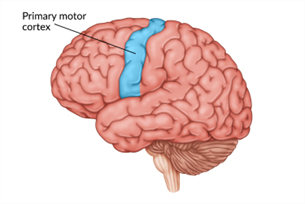
By: Ryan Bird Brain-computer Interfaces Brain-computer interfaces (BCI) are devices which allow users to communicate with computers via the electrical signals generated by neuronal firing (i.e., brain cell activity). For example, prosthetic limbs can be connected to the brain’s motor cortex (see Figure 1 below) with implantable electrodes, permitting the user to control the prosthesis just as they would any other limb. Although BCIs have been developed and tested in various forms in both human and non-human models for decades (i.e., cochlear implants), recent advances in artificial intelligence and surgical technology are paving the way for incredible medical breakthroughs once thought to be the stuff of science fiction. Figure 1: Motor Cortex Monumental Progress On December 22, 2021, Philip O’Keefe took over the Twitter account of Synchron ¹ CEO Thomas Oxley and posted a very short tweet. “Hello, world! Short tweet. Monumental progress.” It doesn’t appear to be much at first glance, ...

Can ChatGPT Do the Human Factors Work for My Medical Device?

  By: Jack Sharples The increasing sophistication of AI tools like ChatGPT represents a major development in the usefulness of information on the internet. As experts in human factors consulting, our business runs on using our experience and acumen to guide our clients through the human factors process. We decided to see if ChatGPT “thinks” that their service could replace the real people here at Core Human Factors. It seems that ChatGPT does a great job at explaining why skilled humans haven’t been replaced quite yet, at least in human factors consulting! Check out the questions and responses below, and then go ahead and send us an email to get the conversation started. Can I rely on ChatGPT for medical human factors consulting? As an AI language model, I am not a medical human factors consultant, nor am I a substitute for one. While I can provide general guidance on human factors principles and best practices, I cannot provide specific advice on the design or testing of med...

From Clinical Psychologist to Human Factors…an Unexpected Journey

By: Latanya S. H. King, PsyD A quick internet search will yield a definition of psychology as the scientific study of mind and behavior. But unfortunately, many people also assume they know exactly what psychology is, and never look beyond the quick and surface level definition. There are so many aspects of psychology that impact every career field, but often the average person only thinks about therapy. Through this same lens, many college freshmen pursue an undergraduate degree in psychology with the goal of becoming a practicing psychologist that provides various types of clinical treatment. My journey was no different. After earning a Bachelor of Arts in Psychology, a Master of Arts in Counseling Psychology, a Doctorate in Clinical Psychology, and completing post-doctoral requirements, I had accomplished my goal and was working as a Clinical Psychologist and Professor of Psychology. I LOVE clinical psychology. My passion for studying people, their thinking, and their behaviors ...

Action Intention Gap

Image
By Jack Sharples This month, I marked my six month anniversary as a researcher at Core   Human Factors. I started at Core after finishing a Masters in Behavioral and Decision Sciences last summer and have been reflecting on the overlap between my graduate school experience and the work that we do at Core. A large component of my education and training was seeking to explain what drives human judgement, decision-making, and behavior. I continue this work at Core when exploring the root causes of use errors.   Intentions are an important component of understanding why people make certain decisions. Decision-making expert Jonathan Baron describes rational behavior as behavior that aligns with individual goals [1] . For example, if someone decides to jump out of a plane, they are behaving rationally if they acted in pursuit of a thrilling experience. For others (including me!), deciding to skydive would be highly irrational because we generally aim to avoid unnecessary risks and d...

Join Core at the SMi 4th Annual Conference in London

Image
  Core's Rebecca Moses and Kimberley Alexander will be leading a workshop about human factors at the injectable drug delivery conference in London this May. Becky and Kim are looking forward to sharing their insight and experience with applying human factors to the development of injectable combination products, as well as discussing topics such as training and memory decay, risk analyses, and instructions for use with workshop attendees. Learn more at www.injectable-drug-delivery.com.

Bert, the Human Factors Manikin

Image
  Nicole Stephenson: Well hello Bert, thanks for taking the time to talk with me today.   Bert the Manikin: No problem! Happy to chat. NS: First, can you tell me the difference between a manikin and a mannequin?   BM: Of course! Mannequins are mainly used as models for clothing in stores. A glamorous life! I’m a manikin — we are used in healthcare and research settings for educational purposes.   NS: I see. Two important but very different jobs. How do you help with healthcare training and education? BM: Well, people can use me and others like me in all kinds of ways: to learn CPR, to practice surgery, to learn anatomy, and more. I personally help with human factors testing at Core Human Factors. NS: What kinds of things do you do there? BM: I help with all kinds of products. Nurses, caregivers, and even laypeople use me to pretend they’re interacting with an actual person while testing out a new medical device. I get poked and prodded quite a bit, but I don’...